Product description
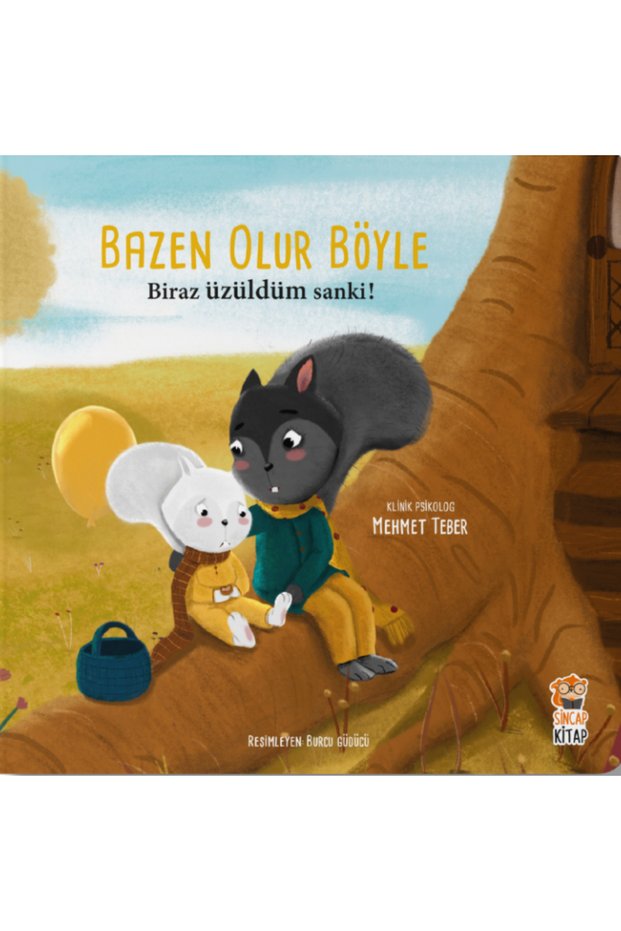
Sometimes it happens like this, i'm a little sad! "my walnuts are broken!" - a story about understanding sorrows
do you remember the moment when his favorite toy broke, it was time to go home from the park, or you scolded him a bit harshly with a moment of distraction? That moment when your child's eyes fill with tears, their voice softens, and they withdraw into themselves... we often try to calm them down immediately with phrases like "okay, don't cry, we'll buy a new one" or "there's nothing to be upset about." But most of the time, what they need in that moment isn't a new toy or a quick fix. It is the noticing and understanding of that “yellow balloon” growing inside.
"sometimes things happen, i'm a little sad! ...helps your child understand that sadness is as natural as happiness, and crying is a comforting companion that deflates that yellow balloon in their heart. "short summary of the book
this valuable work from the pen of clinical psychologist dr. mehmet teber
tells the story of the white squirrel, who drops the walnuts he collects on the ground and breaks them, and whose heart breaks with his father's warning." The book, which personifies sadness with the metaphor of the yellow balloon, teaches children not to hide their feelings, the comforting power of crying, and how sharing emotions lightens the heart.
benefits for children ● Emotion regulation: instead of suppressing sadness, it learns to accept it and express it in a healthy way (crying).
● Cognitive flexibility: thanks to the "yellow balloon" metaphor, it makes sense of what's happening in the mind during moments of sadness with a concrete concept.
● Self-confidence and transparency: the ability to express their emotions is supported by realizing that it is not a necessity to hide their feelings and that they can express themselves to their parents.
● Empathy development: it increases social awareness by understanding that not only oneself, but also friends and even adults can sometimes be upset. Benefits for parents
this book will be your greatest guide in dealing with the feeling of sadness: ● The right way to comfort: when your child cries, instead of trying to silence them, say, "i think the yellow balloon has inflated, you can cry and relax." It allows you to offer concrete and pedagogical support by saying.
● Communication bridge: "what's got you down?" When you can't get an answer to your question, the conversations you have about the squirrel in the book will help you understand its inner world.
● Reduces guilt: provides a practical solution to help you understand and heal from that feeling of sadness that sometimes arises when you unintentionally get upset with someone. Who is it suitable for?
● Children aged 4-6, who experience intense emotions and have difficulty understanding them... ● Children who try to hide their tears or become angry when they are sad… ● All parents who want to give their child the most basic step of emotional intelligence (eq), which is the ability to "accept emotion"...
dear parent, we know that you always want your child to laugh. However, true happiness lies in being able to also embrace sadness. "it happens sometimes, i'm a little upset!" Tell your child, "it's perfectly normal to feel sad, and i'll be here for you until your yellow balloon loses its color." Is the most heartfelt way to say. You can choose to read this book together, to meet the tears with love, and immediately after to leave a beautiful smile.
frequently asked questions
1. Does it encourage my child to cry?
no. The book tells us that sadness and crying are natural. The child whose emotions are suppressed becomes aggressive, while the child who cries and deflates his yellow balloon calms down and cheers up much faster, it reminds us of this.
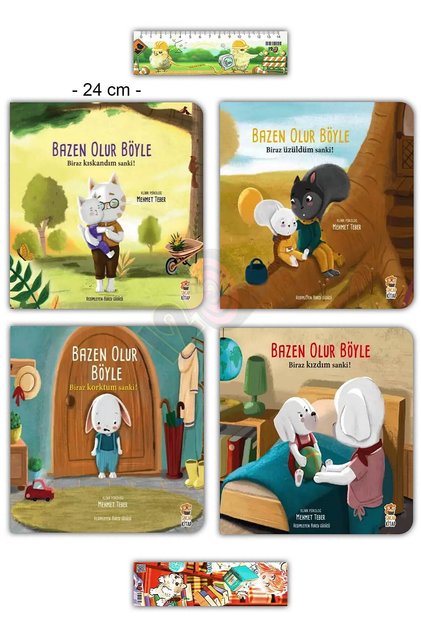
2. Is the story appropriate for 4 year olds? Dr. mehmet teber has crafted the text in a rhythmic and very simple language suitable for the world of his preschool child. Burcu güdücü's soft-toned drawings transform the story into a peaceful experience. Is it connected to the other books in the "sometimes it happens" series? Each book in the series addresses a different emotion (anger, envy, fear) with independent stories. It can be taken as a set, or it is an excellent feeling training material alone.