Free shipping
Only 3 left!
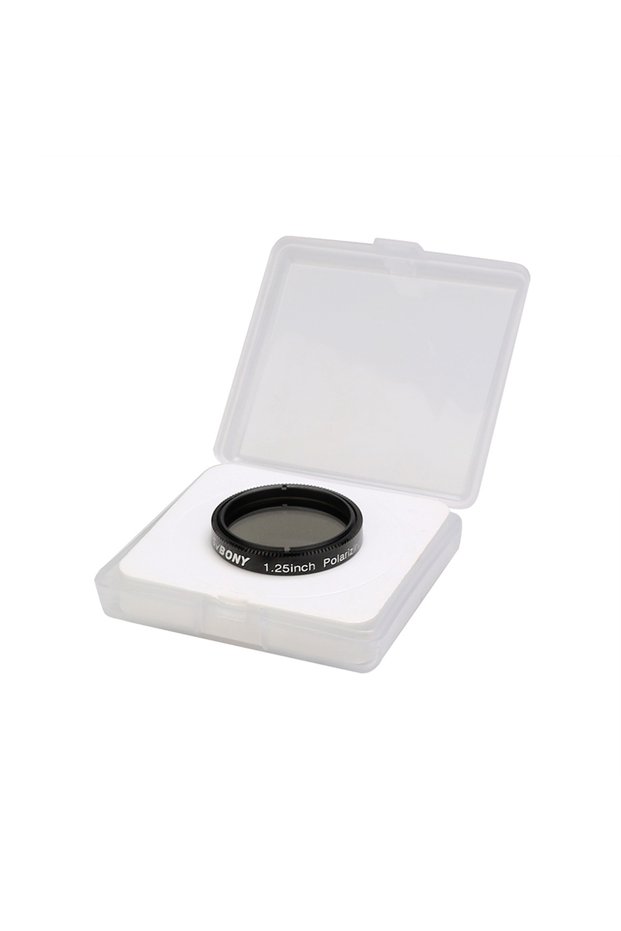
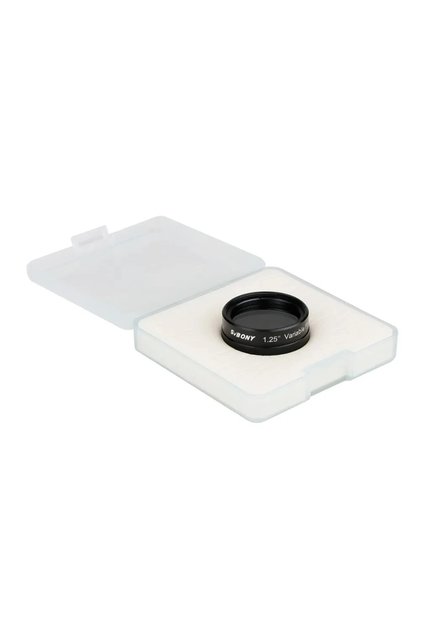
Svbony 1.25-in Telescope 1.25'' Linear Polarizing Filter,Increasing Contrast Reduce Glare,for
No reviews yet.

Special Deals
35.2927.88AED
Free shipping
Delivery address

Select your address, find out the delivery date!
Trendyol's commitments
Easy and free return in 15 days.
Payment methods



Coupons
Highlighted features:
Svbony 1.25-in Telescope 1.25'' Linear Polarizing Filter,Increasing Contrast Reduce Glare,for features
Color
Multicolor

Big Save Store
8.8
79.3K followers
Seller information
Similar items

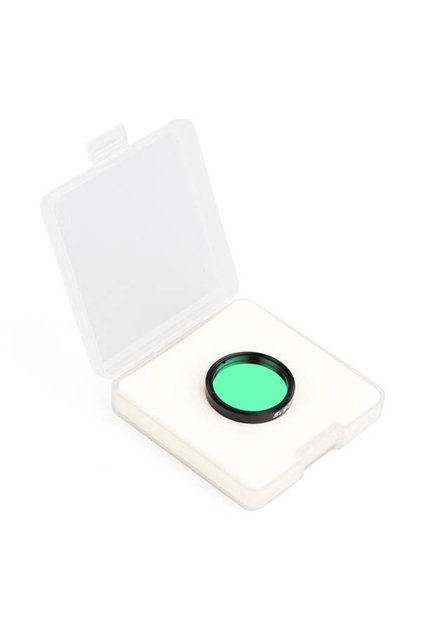





Svbony 1.25-in Telescope 1.25'' Linear Polarizing Filter,Increasing Contrast Reduce Glare,for reviews
No reviews yet.
Product details
Additional info
- A maximum of 10 units of this product can be ordered. Trendyol reserves the right to cancel orders over 10 units.
- Barcode No: 3642907230296
Svbony 1.25-in Telescope 1.25'' Linear Polarizing Filter,Increasing Contrast Reduce Glare,for features
Color
Multicolor
Safety information
Product safety information
Product description
Color:1.25-in

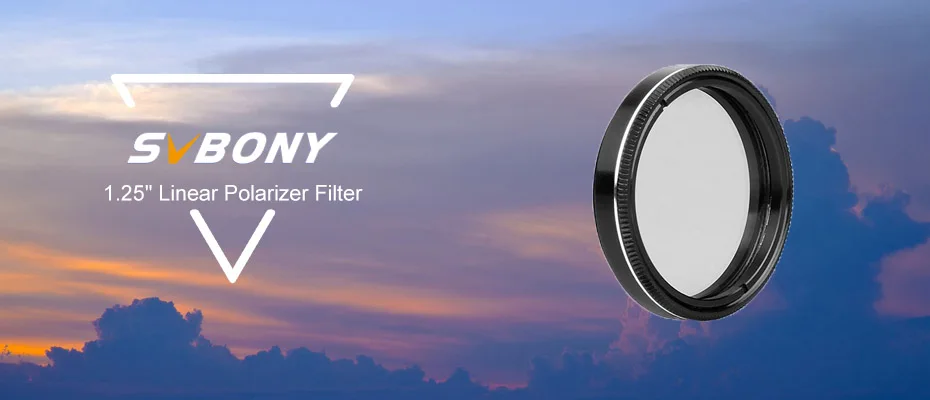
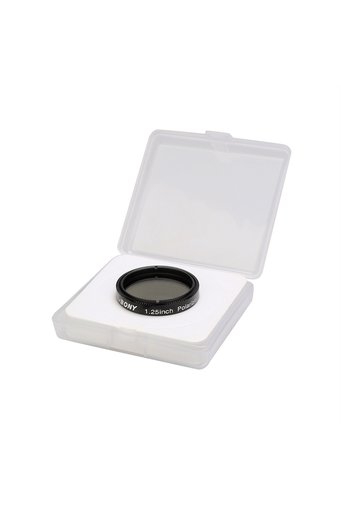
Svbony 1.25" Linear Polarizer Filter Anodized Aluminum Optical Glass for Lunar Planetary Observing
The Svbony 1.25" Polarizing Filter is high quality anodized aluminum, optical glass polarizing filter designed to reduce the amount of light entering your eyepiece. You can progressively dim the view when observing a bright object, such as the Moon or certain planets, to a level according to your needs, whilst increasing contrast, reducing glare and increasing the amount of detail that can be studied. The 1.25" Polarizing Filter is the best all-purpose lunar and planetary filter.
Features:
1.Svbony 1.25 Inch Polarizing Filter
2.Individually precision ground, highly polished
3.Polarizing Filters are made from optical glass
4.Allow for maximum contrast of lunar detail, Enhances the contrast of the moon and planets in photographic images
5.Progressively Dim the View, increasing Contrast for telescope Eyepiece
6.Have a standard 1.25" filter thread (M28.5*0.6)
7.Materials: Aluminum
8.Net Weight: 6g / 0.21oz
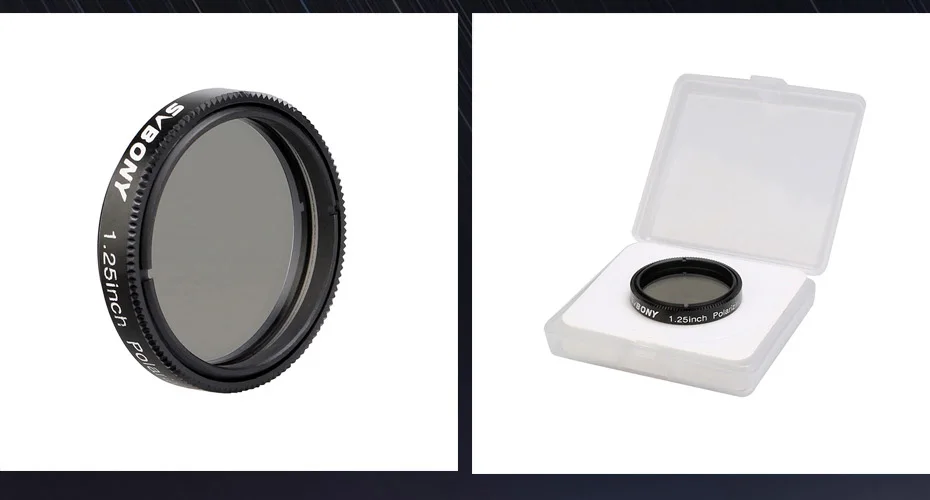
Multi-coated Glass with an lon-assisted Deposition Technology/Standard 1.25 inch/M28.5*0.6
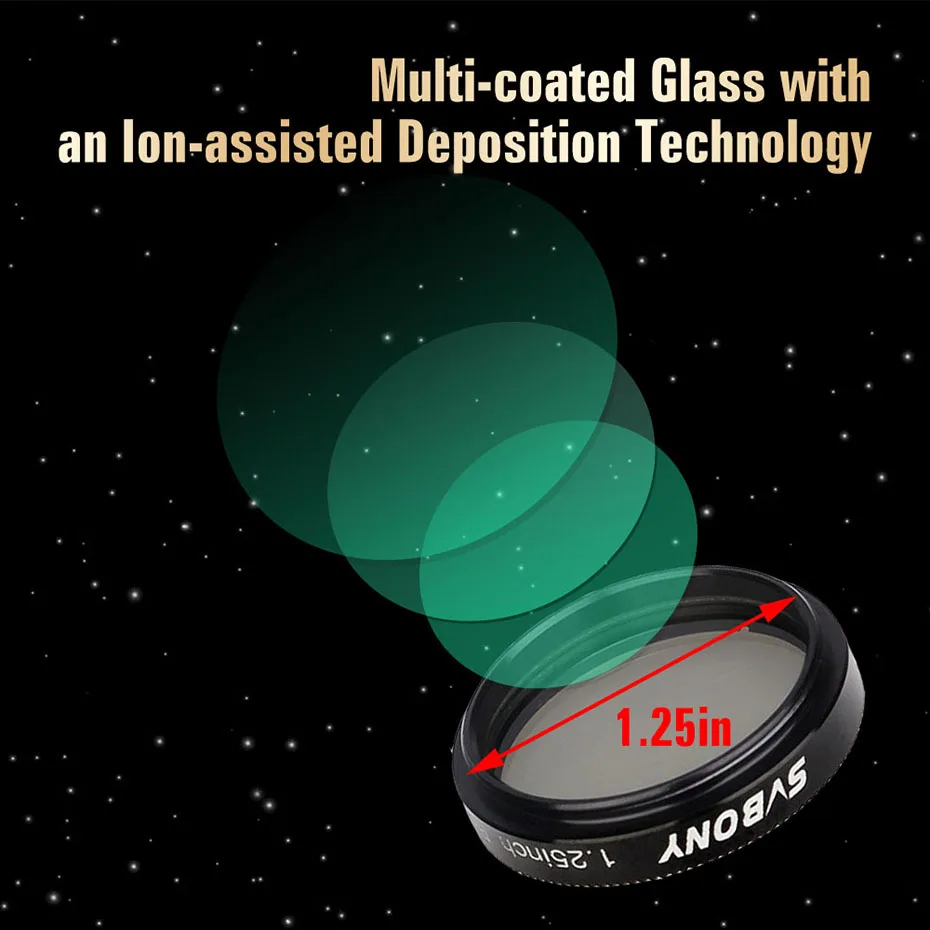
The effect of using Linear Polarizer Filter
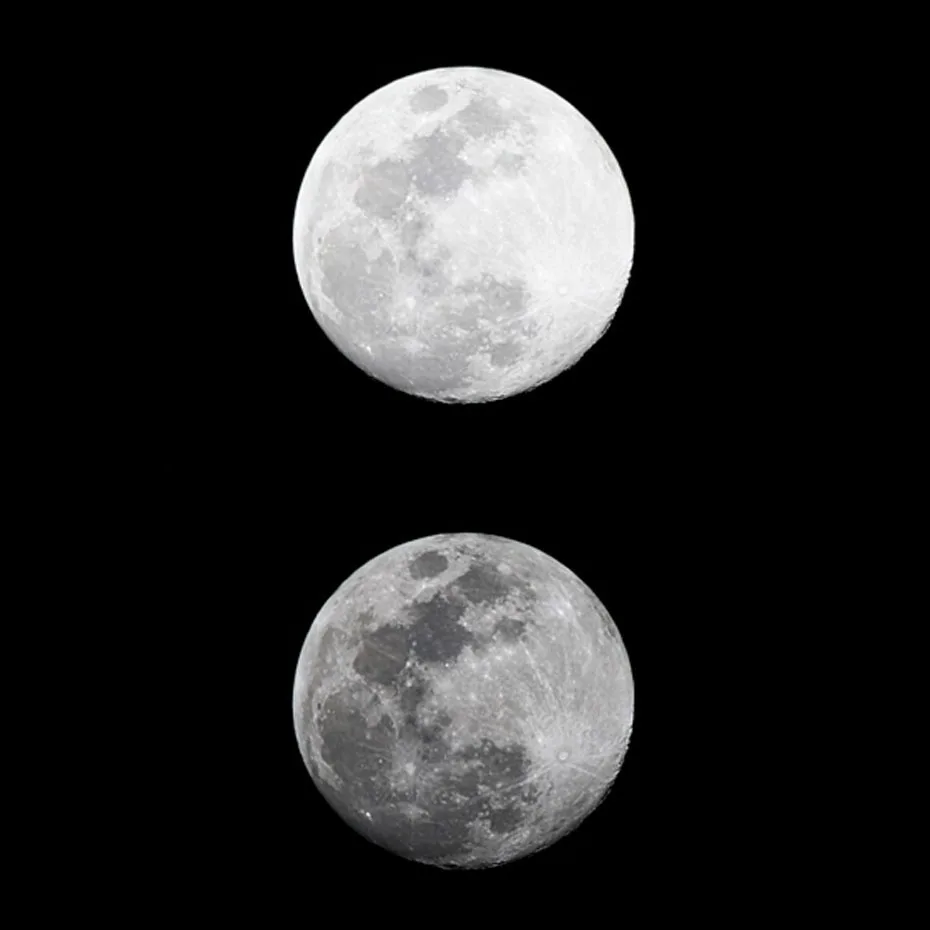
How to use it?
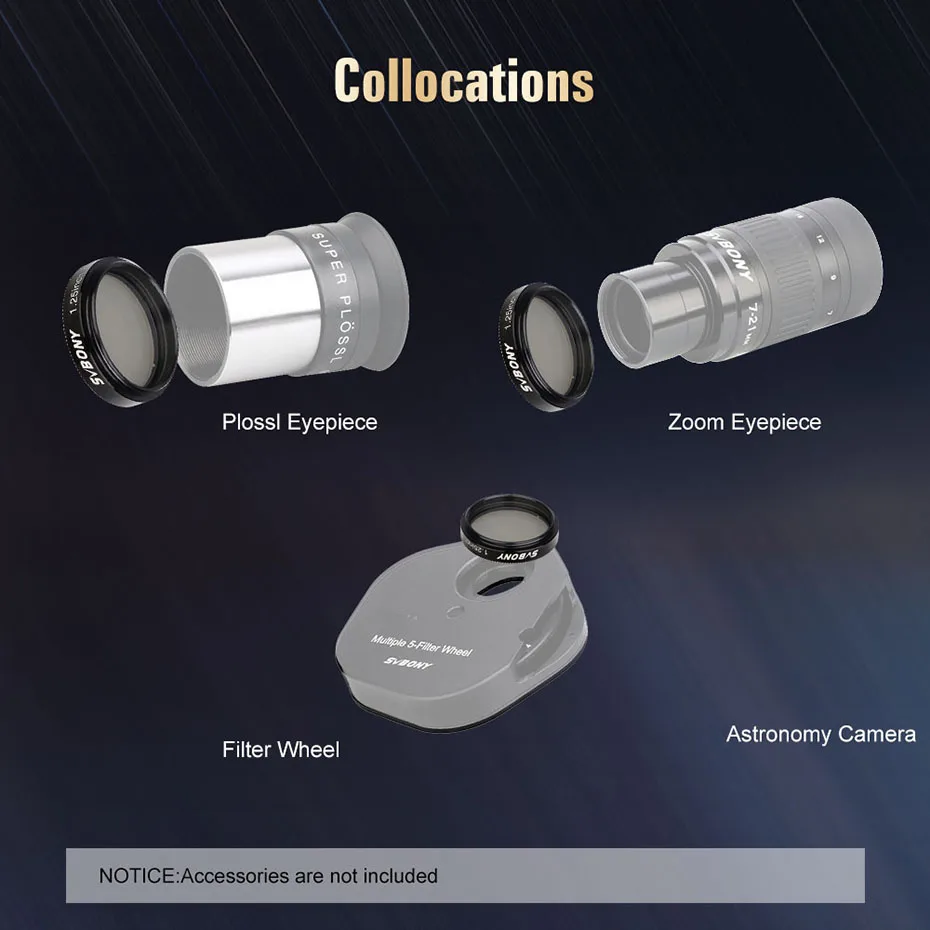
NOTE
A question we often get is: "Should I purchase a linear polarizer or a circular polarizer?, what's the difference?"
Polarizers can also increase the saturation of colors by eliminating some of the light reflected from things like leaves or grass, which can also be slightly polarized. Polarizers are well known for their ability to darken the sky (especially around 90 degrees from the position of the sun). This is because the light scattered from that part of the sky is quite strongly polarized by the scattering process. If the polarizer is oriented to block out this polarized component, the sky gets darker. Polarizers can also help in cutting out atmospheric haze, since the source of this haze is also scattered light. Though the scattering process in this case is somewhat different from light scattering by the blue sky, there can still be a small degree of induced linear polarization.
Circular Polarizers
Now for circular polarizers. If a linear polarizer blocks or allows the passage of linear (or plane) polarized light, you might justifiably think that a circular polarizer should do the same thing for circularly polarized light - and it does, but it is also sensitive to linear polarization. This is just as well, since the phenomena we have just looked at, such as reflection of randomly polarized light from a partially reflecting surface, result in linear, not circular polarization. A polarizer which accepted only left or right handed circularly polarized light would be of no use in suppressing reflections - in fact it would mainly act as a rather expensive neutral density filter!
A "circular polarizer" actually consists of two elements. The first is a linear polarizer, exactly the same thing as the linear polarizer we have just discussed. The second. element is called a quarter wave plate and it is cemented to the back of the linear polarizer with a specific orientation such that the light emerging from the quarter wave plate is circularly polarized (hence the "circular" polarizer name). How it does this is beyond the scope of this article, but take it from me, it does!