Free shipping
2 AED coupon deal!
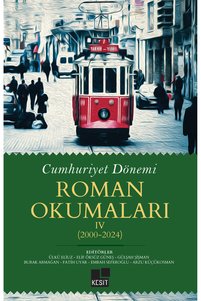
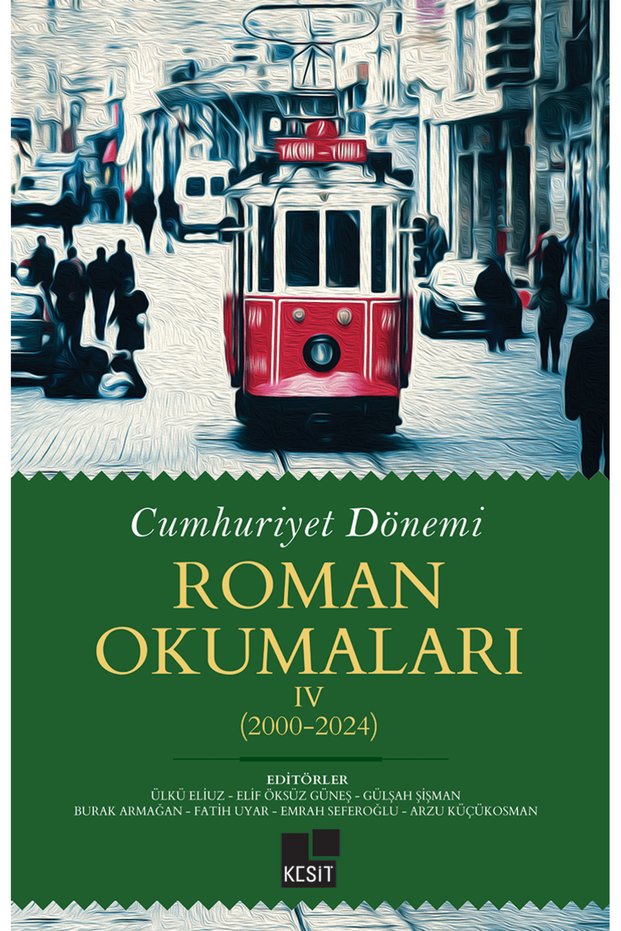
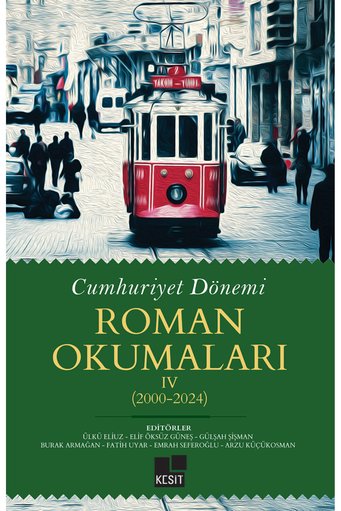
Kesit Yayınları Cumhuriyet Dönemi Roman Okumaları IV (2000-2024) - Collective
No reviews yet.
Checkout Discount 53% Off
At checkout
42.92 AED
91.32 AED
Free shipping
Delivery address

Select your address, find out the delivery date!
International delivery
Trendyol's commitments
Easy and free return in 15 days.
Payment methods




Coupons
Highlighted features:
Kesit Yayınları Cumhuriyet Dönemi Roman Okumaları IV (2000-2024) - Collective features
Dimensions
Normal Size
Year of Publication
2024
Number of Pages
651-700
Set/Single
One item
Origin
TR
Volume Information
Paperback

Kitababak
5.9K followers
Seller information
Kesit Yayınları Cumhuriyet Dönemi Roman Okumaları IV (2000-2024) - Collective reviews
No reviews yet.
Product details
Additional info
- Sold by .
- The selling price on Trendyol already includes the export-related costs.
- Made in Türkiye
- A maximum of 5 units of this product can be ordered. Trendyol reserves the right to cancel orders over 5 units.
- Barcode No: 9786256869462
- Origin: TR
Kesit Yayınları Cumhuriyet Dönemi Roman Okumaları IV (2000-2024) - Collective features
Dimensions
Normal Size
Year of Publication
2024
Number of Pages
651-700
Set/Single
One item
Origin
TR
Volume Information
Paperback
Safety information
Product safety information
Product description
Post-republic turkish literature, which is a continuation of the modernization process after the republic, draws attention to changes and transformations at both structural and thematic levels. In this era, shaped by globalization, digitalization, and the reinterpretation of local cultural codes, the novel genre, in particular, diversifies and deepens, adopting a multi-layered perspective on individual and societal issues. With the widespread adoption of postmodern narrative techniques, the emergence of experimental texts, and the blending of local and universal values, the diverse novel genre evolves into a narrative structure in post-2000 turkish literature where the individual's inner journey is synthesized with social issues. Individual issues such as memory loss, selfhood, freedom, identity, belonging, love, love, search, escape are integrated with social issues such as alienation, lack of communication, commitment to values, modernization, migration, economic inequality, social gender, corruption. The political, economic, and cultural shifts turkey has experienced in the last quarter-century resonate in a fictional world, expanding from me to us. The novel, which plays an active role in creating memory, moves away from the traditional narrative structure and leans towards more fragmented, polyphonic, and experimental structures. The positioning of narrators falls into different categories. Writing process is included in the fiction; Perceptual time and space usage becomes widespread The plot structure varies as a reflection of the pluralistic approach of the era. The existence of postmodern techniques such as parody and intertextuality becomes clear. All structures of the type and type are queried. Thus, the narrative ceases to be a mere storytelling tool and transforms into a literary laboratory. This study, which aims to shed light on the last twenty-five years of the turkish novel of the republic era with twenty-five works published between 2000-2024, has solved the following works in terms of structural elements and thematic fiction: music on my bedside, barbarian's laughter, the daughter of the cümbezi, dream cut, wrong choices neighborhood, falling, güneş saygılı's real life, a brief history of a madman's house misrepresented, red time, the place where the fish fell captive, dwarf, family tea garden, surveyor, history of nature, the disabled, and fire consumes us, the dilemma of the stuntman, and a plot disappears with sorrow, high heels, trak, tribe, the last passenger, the worldless, our great helplessness, gizliajans. The aim was to demonstrate the literary movement of the genre in turkish literature in terms of thematic diversity and structural innovation during the process with these selected texts. The works of the turkish author, which maintain their ties with the past while capturing the spirit of the era, were scientifically evaluated in terms of their narrative, which includes elements such as name-content relationship, plot, perspective and narrator, time, space, and the world of people, as the invisible arrangement of the intrigue of fiction. Post-2000 turkish novels, which are constructed in the form of a fast, disjointed, fragmented and experimental journey, can be evaluated as a social memory record with a wide meaning field, complex and uncertain. These texts, aiming to indicate something rather than to state it, present individual and collective trajectories at the same crossroads, both in the present and in the past. In these narratives, built upon the shaky foundations of all past values, a multi-layered/multi-faceted image emerges, transcending the limitations of the presented section and challenging the fragmentation and confinement of truth in the individual-society relationship.